What Is Taro (Kalo), the Plant That Sustains Hawaiian Culture?
 shoan
shoanToday, I’d like to introduce a plant that we, as people who work closely with nature here in Hawaiʻi, should truly understand and honor.
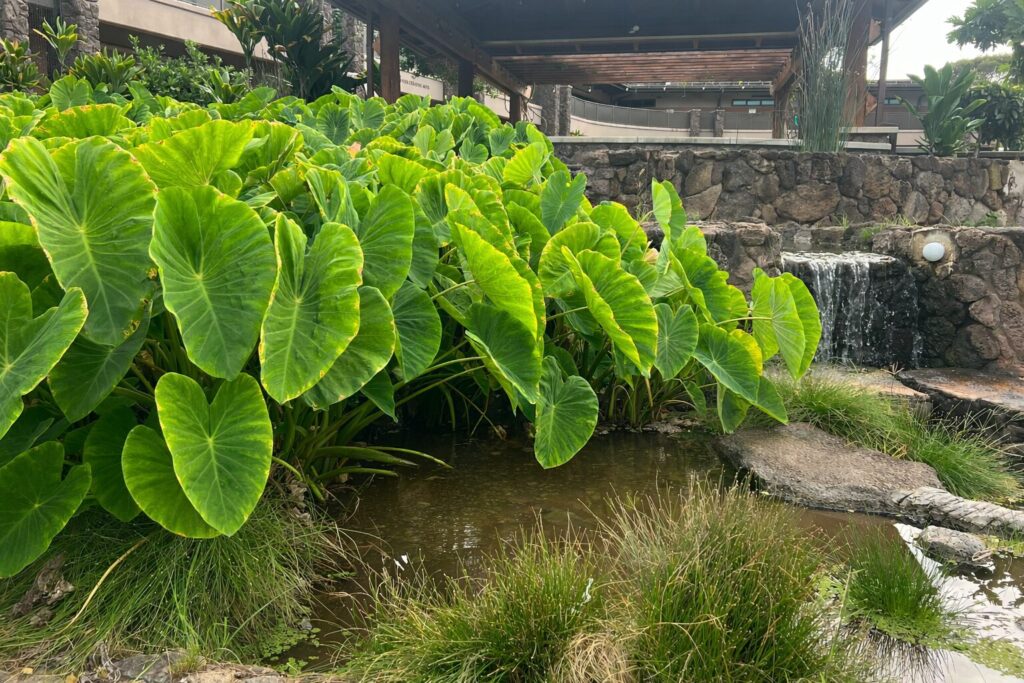
Have you ever seen these large, heart-shaped leaves around the islands? Yes, this is the famous taro, known in Hawaiian as Kalo.
Kalo grows to about 1–2 meters tall, and each leaf can reach 40–90 centimeters. Its underground corm can be quite large as well, sometimes over 20 centimeters in diameter and weighing more than a kilogram. It belongs to the same family as Japanese Satoimo (Potato) and is considered one of the oldest cultivated plants in human history. Kalo is typically grown in wetland environments similar to rice paddies. Thanks to Hawaiʻi’s abundant, clean water, you can find Kalo growing in many places throughout the year.
From this taro plant comes poi, the traditional staple food of Native Hawaiians. For the Hawaiian people, poi is deeply meaningful, and Kalo is regarded as an ancestral symbol. It appears in countless Hawaiian legends, chants, and songs. In local elementary schools, children often grow Kalo themselves and learn to make poi as part of their education in Hawaiian history and culture.
Hawaiʻi is known for its beautiful tropical flowers and colorful lei, but I personally love the sound of clear water flowing through the loʻi (taro patches) and the gentle movement of the kalo leaves.
Just watching them brings a sense of calm......truly a healing place for the heart.
\ Get the latest news /