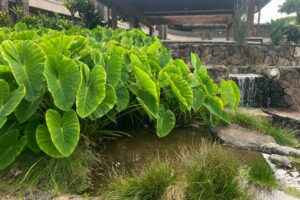
Ikebana tools used in lessons
 shoan
shoanIkebana is one of Japan’s traditional arts, yet it remains closely connected to everyday life. One of its charms is that you can enjoy it without needing any special equipment. Still, there are a few items that can make your practice more convenient, so I’d like to introduce some of them here.
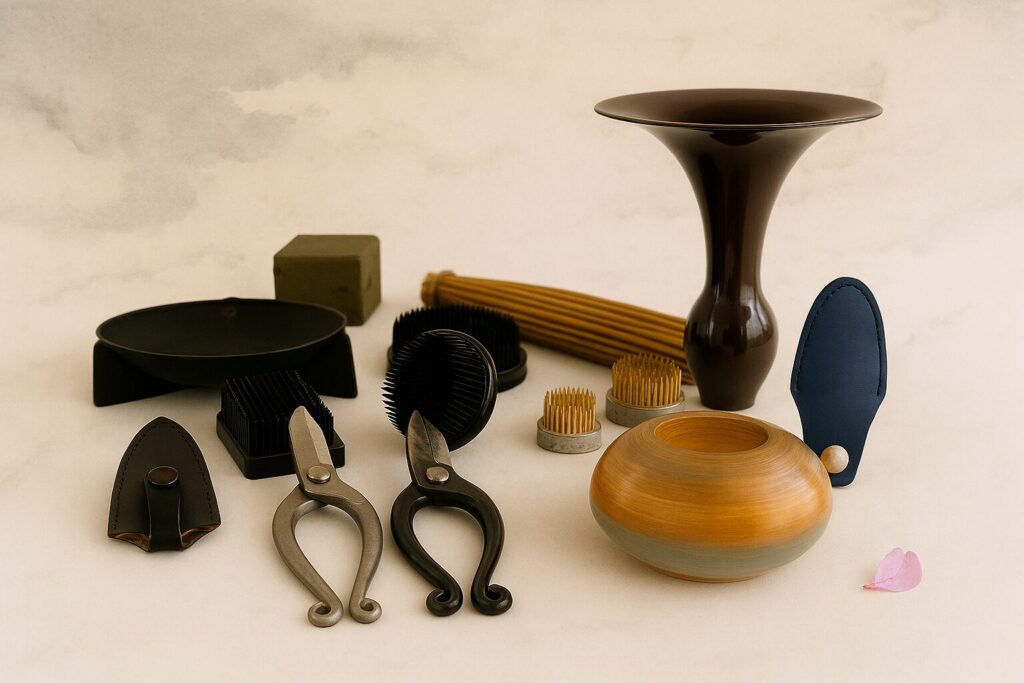
Flower Shears (Hanabasami)
The shape of flower shears varies depending on the ikebana school, and regular pruning shears can be used as a substitute. However, for more delicate work, having proper flower shears is very helpful. Their blades are thicker than ordinary scissors and are designed to cut stems cleanly without crushing them.
• Features: Creates clean cuts that improve water absorption
• How to choose: Look for a weight that feels natural in your hand and handles that are easy to grip
• Care: Wipe off moisture after use and apply a light coat of anti-rust oil to keep them in good condition
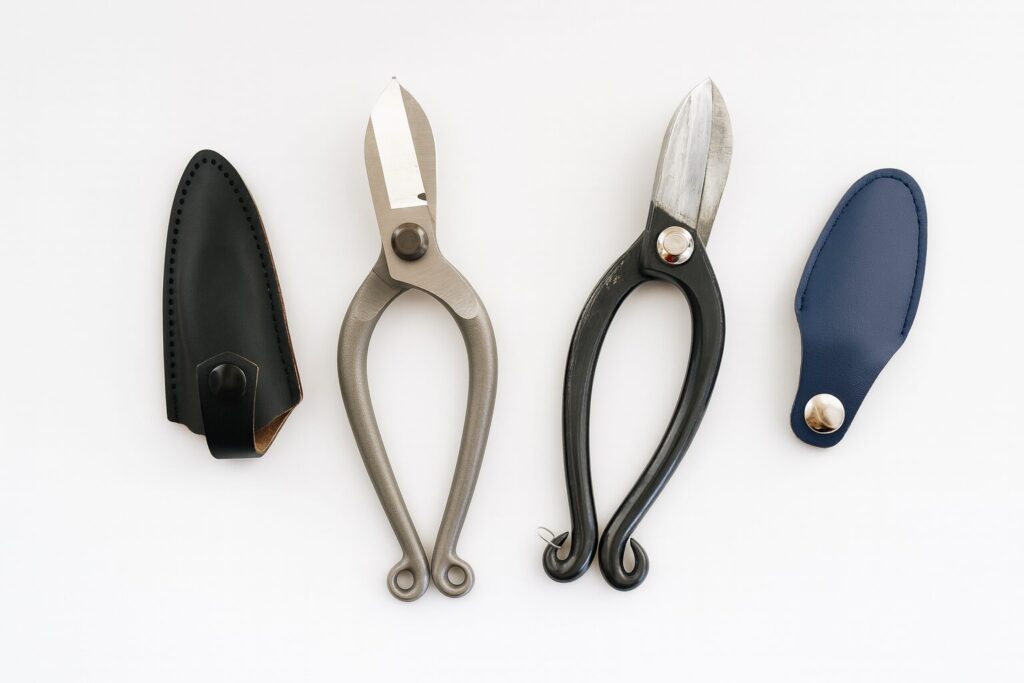
Flower Holders
Flower holders are tools used to support the angle and position of each material. To fine‑tune the direction and balance of a composition, a stable Kenzan is especially useful. Depending on the vase, however, a Kenzan may not be suitable. In those cases, various alternatives such as wire, drinking straws, or branches called Matagi can be used.
• Features: Different types are used depending on the arrangement and the container
• Tips for use: The angle of each stem greatly affects the overall impression, so adjust placement and direction carefully
• How to choose: Select one that fits the shape and depth of your vase
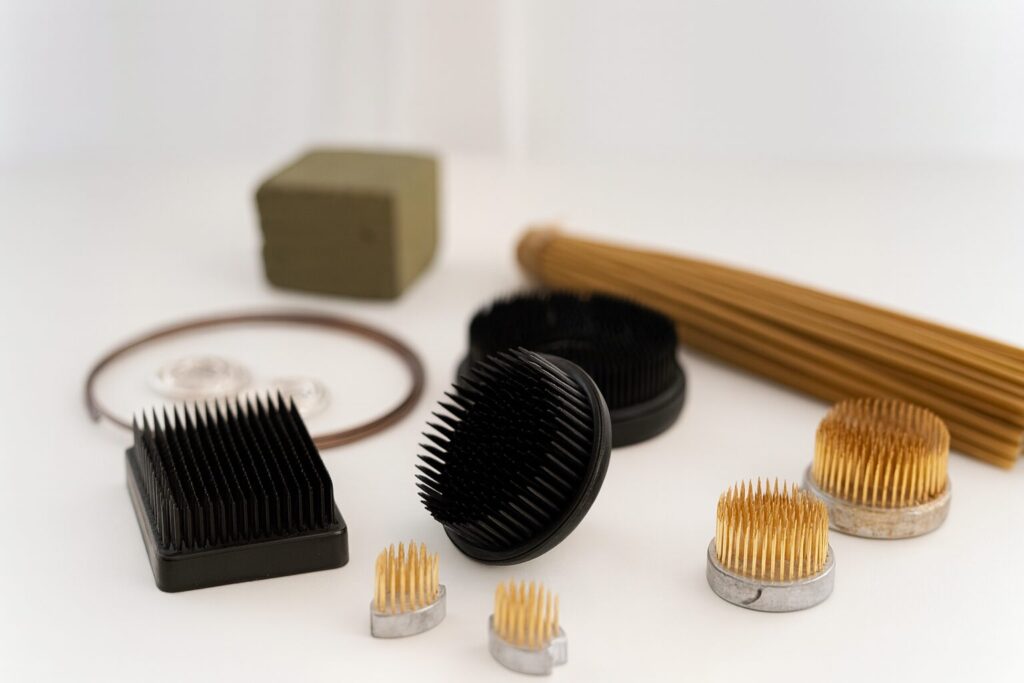
Vases (Kaki)
The vase plays a vital role in defining the overall atmosphere of an ikebana arrangement. Because the balance of shape and height is especially important, choosing the right container becomes a key part of the creative process. While there are vases designed specifically for ikebana, anything that can hold water—such as teacups, salad bowls, wooden masu cups, or even wine bottles—can be used.
• Features: Harmony with the plant materials is essential, and the shape of the container influences the structure of the work
• Key point: Selecting a vase that matches the season or theme helps bring the arrangement together
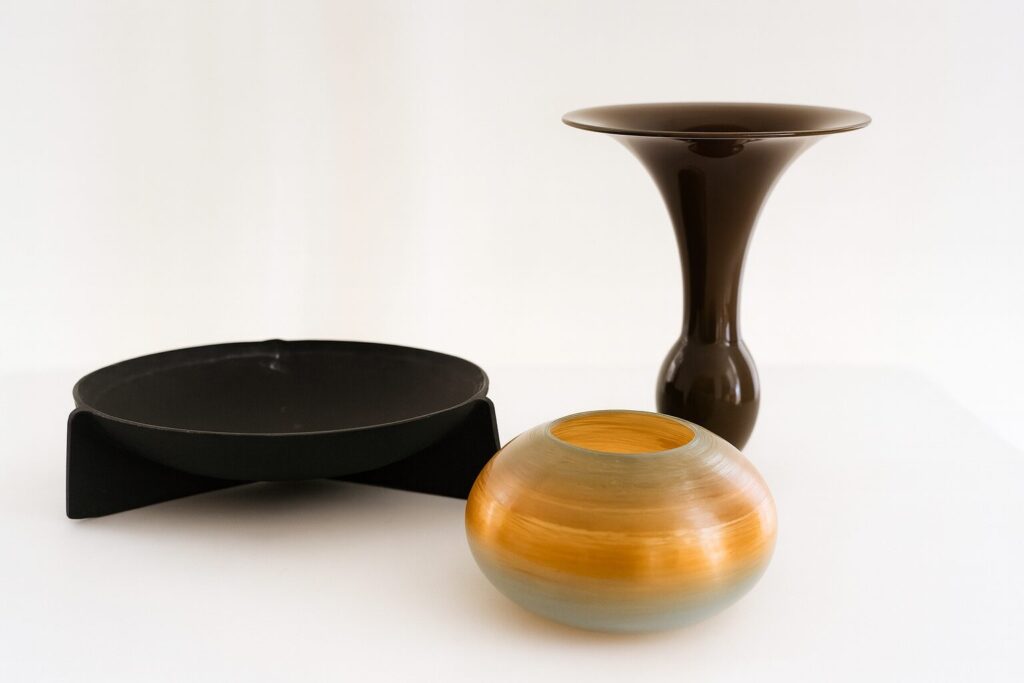
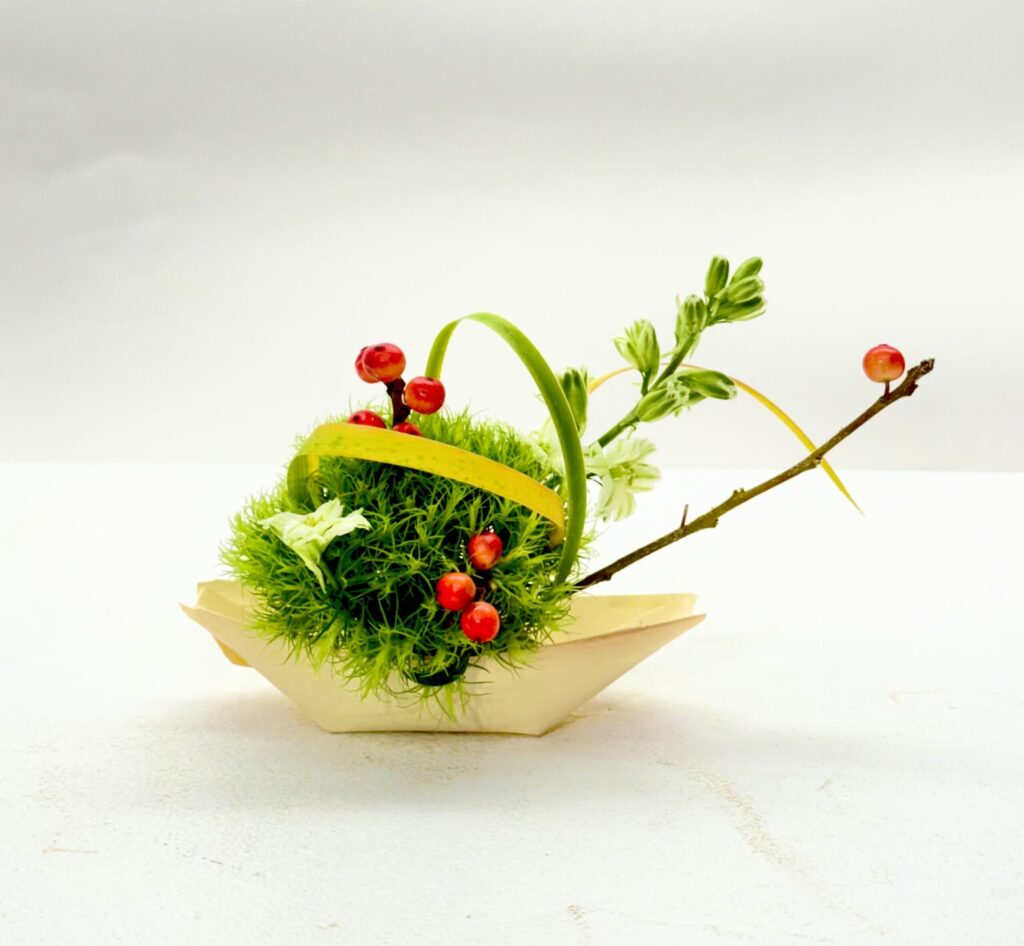
You don’t need a special vase or pedestal. Even a small box from Japanese sweets can turn into a lovely container for an arrangement like this.
Display Boards and Stands
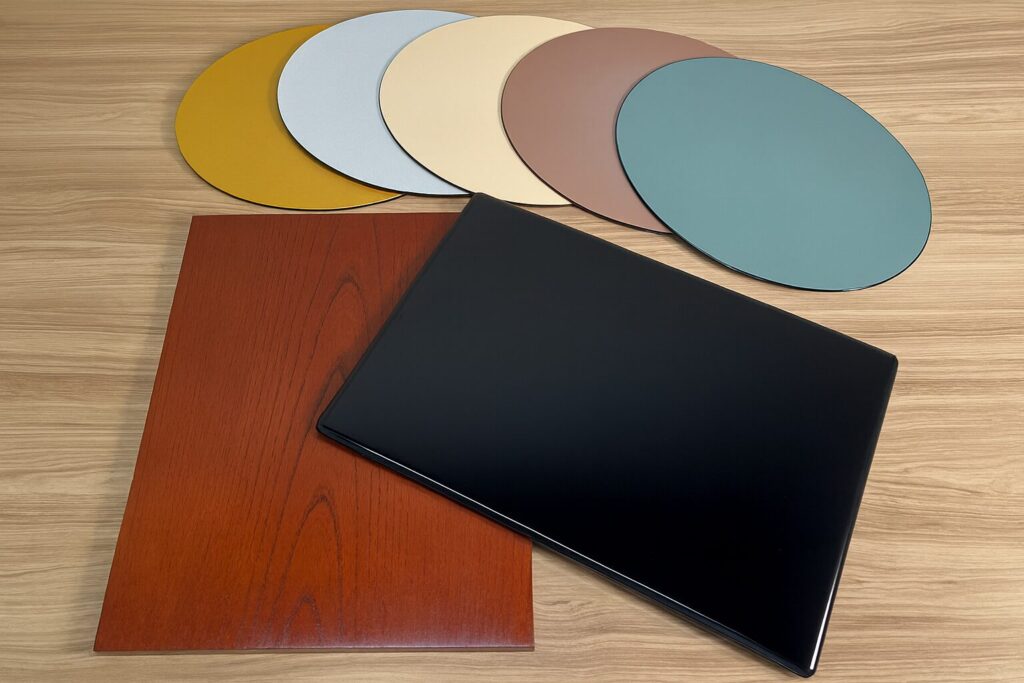
These platforms are used to enhance and elevate the overall presentation of an ikebana arrangement. When used for exhibitions or photography, they help create a more polished and cohesive impression.
• Materials: Wood, lacquer, glass, stone
• Effect: Adds refinement to the work and creates harmony with the surrounding space
Cloths and Towels
They may seem simple, but they play a big role. You’ll use them to dry the vase, tidy your work area, and keep everything clean so your arrangement looks fresh and refined.
In Closing
Ikebana tools are important partners that support the creation of each arrangement. Even if you begin with only the basics, as you continue taking lessons, you will naturally discover what suits your style. Treating your tools with care is also a way of honoring the spirit of ikebana itself.
\ Get the latest news /